For some, the topic of food storage conjures images of a The Far Side-style bunker with everything but a can opener. But effective food storage combined with a strong local supply chain provides a strong foundation for liberty.
A resilient food system is built in depth, with layers of of storing, acquiring, producing, and preserving food for your family. Practically, there’s limits to the extent of food storage. Cost, storage space, shelf life, nutrition, and the human need for variety are all natural limitations.
We can assume that the basic household is on a 2-week food cycle–if the grocery stores all closed, the family would be starving within 2 weeks, after they ate the last year-old granola bar found wedged under the car seat. In contrast, the theoretically ideal self-sufficient homestead is on an infinite food cycle, producing all their own food indefinitely.
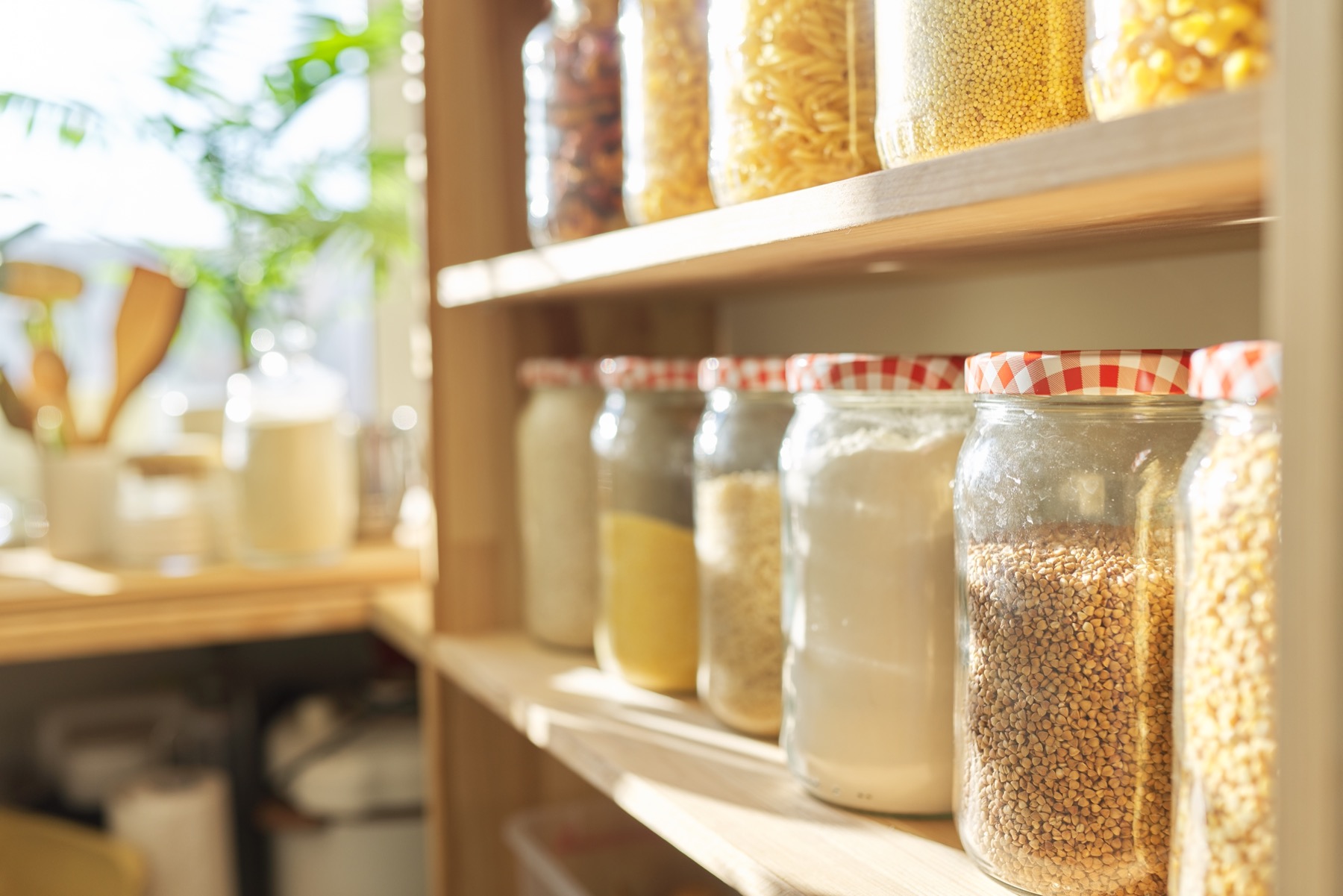
Because food production cannot be everyone’s full time occupation, reality dictates that most of us will fall somewhere between these extremes. The foundational level for food resilience starts in your pantry and refrigerator. How long would it take before you completely cleaned the shelves? How can you increase that length of time? Consider the following:
- Perishables (e.g. fresh dairy and vegetables) can be stocked for 2 weeks
- Frozen foods (e.g. meat, dairy, fruit, vegetables) can readily be stocked tor 12 months, but require refrigeration
- Canned and dry goods (e.g. wheat, pasta, rice, beans, canned chicken or tuna) can be stocked for 2+ years-but offer limited variety and nutrition options
This is the fundamental level of food security. Your ancestors performed similar calculations whether facing siege, famine, or the coming winter.
Food storage can be supplemented with what you can produce yourself. Producing your own food allows you to extend your stockpiled supplies with domestic production, and critically needed nutrients and vitamins. A vegetable garden can give you your own source of fresh produce. A flock of laying hens can give you your own source of eggs. This is a key benefit to finding a more rural and self-sufficient homestead.
Next, source as much of your food as possible from local and resilient producers. American food production relies on a vast supply chain across the US and worldwide. Problems anywhere in this system can lead to shortages directly impacting the consumer. By developing a local and resilient food network, Instead of relying on food to magically appear on the shelf, you can see your beef growing in the pasture.
Finally, do what you can to promote a resilient approach to food in entire community. With 90% or more of U.S. food production based on unsustainable inputs and a fragile supply chain, a breakdown will have catastrophic effects. Local producers don’t have the ability to immediately double their production, let alone increase it by ten or twenty times overnight. So invest in building that capacity now, with your grocery dollars.
Every family that gets their own pantry stocked is one less family that will be needing assistance in a global supply chain failure. Every family that starts buying from local producers is one more unit of local food production capacity. This reduces the need to worry about your friends and family’s provision, and benefits everyone else in the community with an increased local food production capacity.
Building an alternative to our fragile global supply chain is a daunting task. But it is possible to make substantial improvements and greatly increase the resiliency of our families and communities.