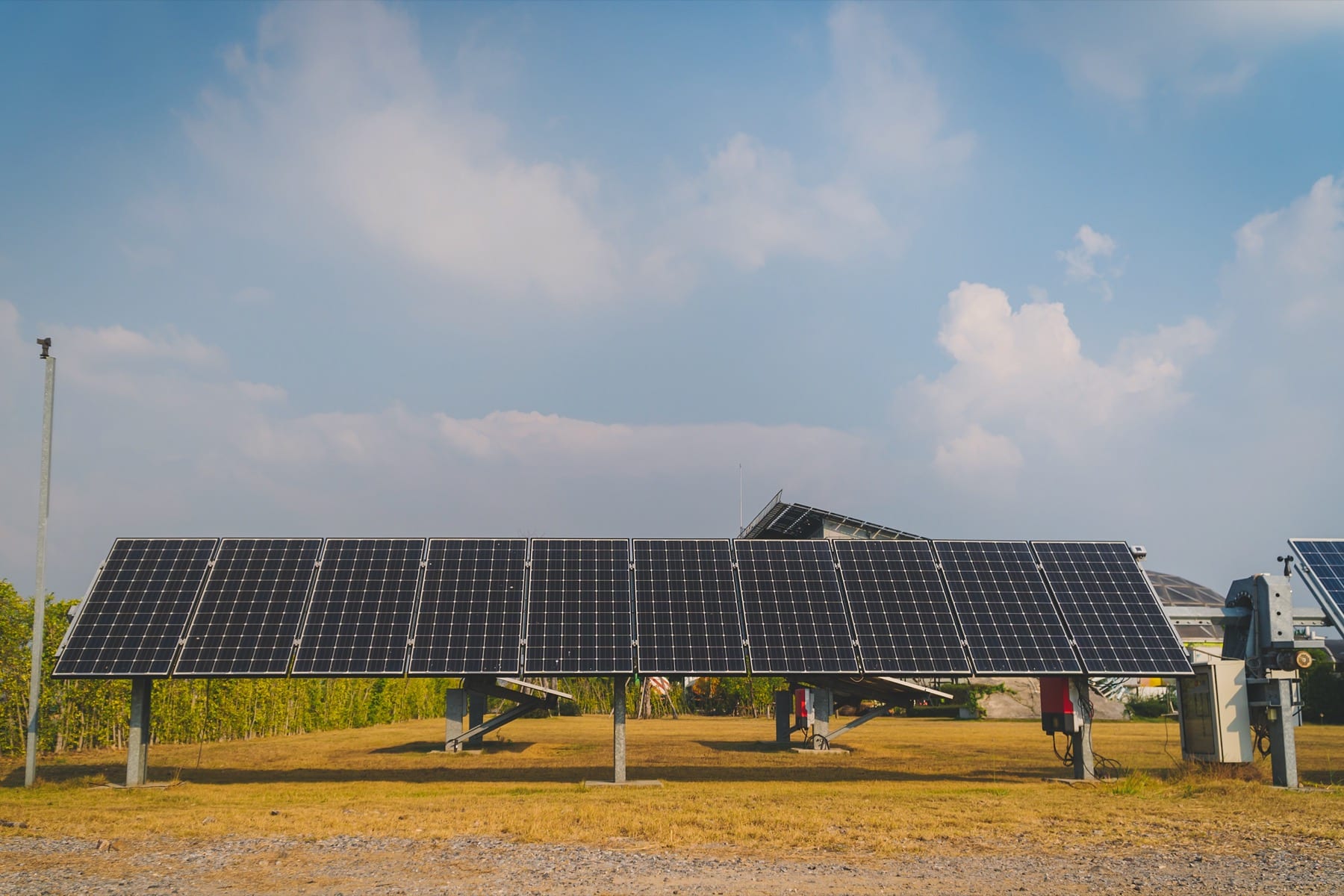
If you are hoping to go off-grid and install a solar power system, make sure to start considering the requirements at the beginning of your property search. The property you select can play a significant impact on the system you need.
Firstly, your region will have a major impact on the effectiveness of your solar system.
Latitude is the single most significant factor in gaining solar power. Your distance north or south of the equator determines how high the sun rises in the sky each day, and thus how intense the solar irradiance. This is especially pronounced at high latitudes and in winter months. Near 49° North (the US-Canadian border), the sun never rises higher than approximately 64° degrees into the sky, at the summer solstice. In contrast, even at the winter solstice at approximately 26° N, the sun still rises to approximately 40° into the sky. In tropical regions, the sun is at nearly 90° every day of the year. Compare the following sun position charts, showing the significant difference in the sun’s maximum elevation between summer and winter in northern and southern portions the the United States:
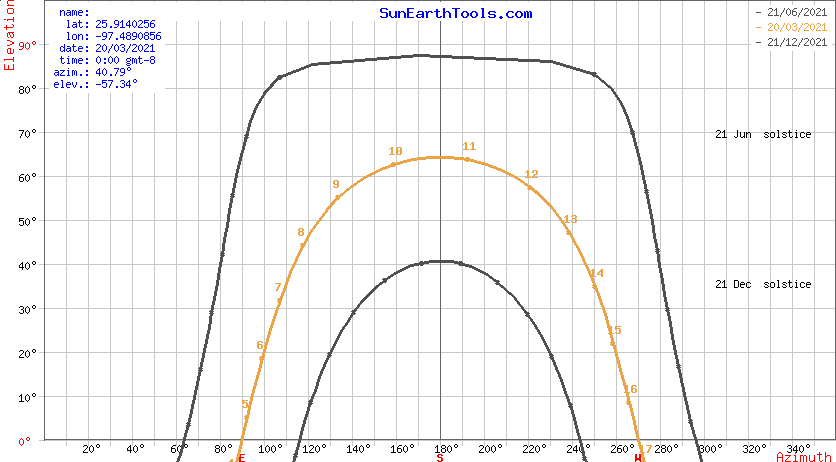
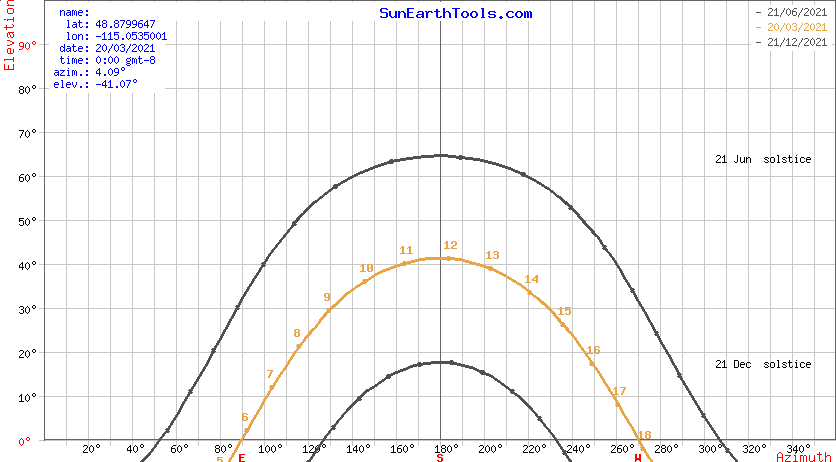
Along with sun angle, the length of day varies dramatically. Higher latitudes gain long hours of summertime daylight, but suffer short daylight hours during the fall and winter months. As you move closer to the equator, seasonal variation is less and less, with constant 12 hour days all year at the equator.
Weather and Climate
Weather has the most variable impact on solar performance. Optimal solar output is obtained with days of full sun. Overcast and cloud cover can reduce output by 25% or more. Under heavy cloud cover and rain or snow, output may be reduced to near zero. This can vary significantly based on your local area, so use tools like City-Data.com’s charts of average sunny, overcast, and cloudy days to gauge how much your system will be affected by inclement weather.
Major weather events also pose risks to solar installations. Solar panels can be vulnerable to damage from hail and wind-blown debris. Investigate these factors, and have a contingency plan to protect your system in the event of a major storm. Similarly, ensure that the installation is designed appropriately to sustain the panels under any potential snow or wind loading.
High and low temperatures will also affect the performance of a solar system. At high temperatures, most solar cells operate at a lower efficiency. However, because this typically coincides with maximum solar irradiance, the practical impact is minimal. Extremely low temperatures can negatively impact the performance of battery banks, and potentially cause permanent damage if cold enough. Newer battery designs are resistant to sub-zero temperatures, making them more resilient than traditional “wet cell” lead-acid batteries.
Local Factors
In selecting a parcel or siting your solar system, assessing the skyline is critical. Take note of where the sun will rise and set on the shortest days of the year, and take note of topography and objects that have potential to shade your system. A hill to the east of your location may shade your system for a portion of the morning, delaying and reducing your total solar power output for the day. Similarly, nearby trees or structures can block needed sunlight.
Optimizing Design
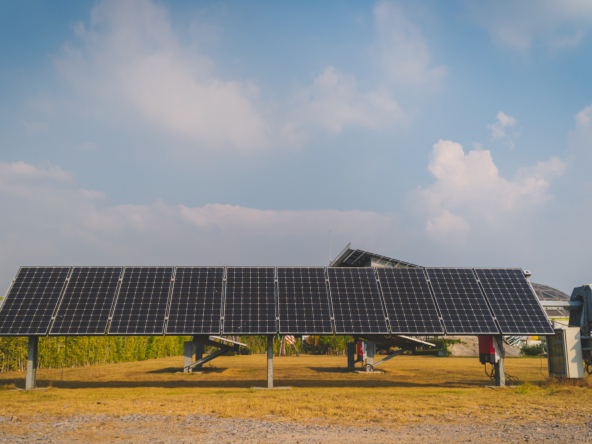
As solar cell technology continues to improve, the the acceptable parameters for use become more flexible. In any case, the optimal output is obtained when the panel is directly facing the sun, receiving the maximum exposure. With a fixed installation, the panels will receive direct incidence sunlight only twice each year. At all other times, the sun will be too high low, east, or west, and only oblique light will be received.
Significant improvement is made with an installation method that allows the vertical angle to be adjusted seasonally. A steeper angle during winter months gains the maximum benefit from low rays, while the panels can be turned up to face the high sun angle in summer months. A solar tracking system follows the sun’s position in the sky each day, in one or two dimensions. Single-axis systems turn the panels from east to west, following the sun’s path across the sky, while a two-axis tracker also tilts the panels to directly follow the sun’s elevation. A motorized tracking system significantly adds to the cost and complexity of an installation. Consultation with experienced solar power professionals such as Iron Edison can help determine the optimal solution for your needs.
Property with Solar Power
While you get greater customization, it may be appealing to purchase a property with a solar power system already installed and operational. Many of the properties featured at SurvivalRealty have turn-key off-grid power systems included. Search our off-grid property listings here. If considering the purchase of such a property, it is advisable to consult with a local solar power consultant or technician to confirm the condition, performance, and suitability of the system to your needs and the location.