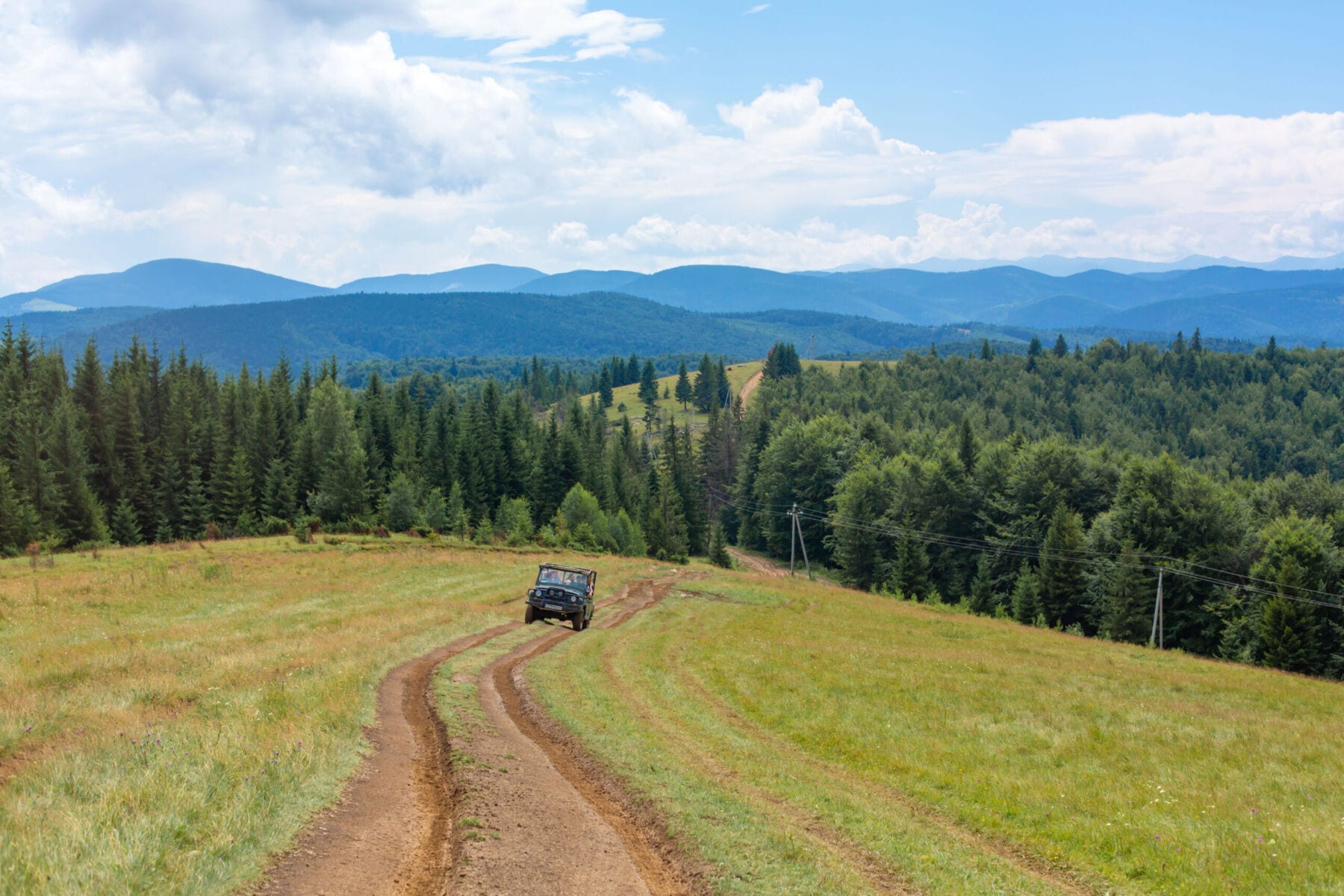
Everyone know that real estate is all about “Location, location, location.” But if you want to get away from it all, you may need to start thinking “Access, access, access!” No matter how well prepared your retreat, there’s going to be a time where you need to get to civilization–for work, groceries, or just because of cabin fever.
If your personal preference (and that of everyone in your family) is for a very secluded and self-reliant lifestyle, an extremely inaccessible location may be a great fit. For others, being able to access some level of civilization on a daily or weekly basis is essential.
Factors Limiting Access
Natural barriers are the most immediate hindrance. If your property is in a winding canyon, beyond an mountain pass, or on the far side of a lake, you will have a much longer drive, potentially along steep or winding roads.
Weather may make access much more challenging during some seasons. At northern latitudes and high elevations, snow and ice can turn passable roads into treacherous “toboggan runs.” In the spring, high water and mud can make rural roads equally challenging.
Maintenance can affect the reliability of your access. Dirt and gravel roads with heavy ruts, potholes and washboards are uncomfortable and slow. A road prone to washouts, frequently blocked by fallen trees, or falling debris can be a major obstacle–especially if you do not hove an alternate route. In winter, an unplowed road can become completely impassable after a moderate snow storm.
How to Assess
When you’re looking at a property on a map or in Google Earth, use the “3D” view to get perspective on the route in to the property from the nearest highway. Take particular note of steep or windy sections. If Streetview is available, it can provide some idea of what the road conditions are like.
Next, determine whether the access to the property is over state or county maintained roads. You should be able to find or request a map showing the road classifications from the county government. For example, Boundary County GIS in Northern Idaho. It’s also worthwhile to inquiry about snowplowing frequency. Priority is generally given to major thoroughfares and rural school bus routes. If the property is not on a county-maintained road, you’ll need to inquire with the property owner or listing agent about the local road maintenance. Rural road committees vary greatly–some take a collection for maintenance every few years, while others are well organized, with regular dues. Again, ask about snow plowing specifically.
When driving to the property, you’ll see the worst condition between late fall and mid-spring. If you are driving the road in the summertime, take note of the road surface–whether dirt, gravel, or paved–and its condition. Consider how drivable the road would be in adverse weather conditions.
If the property is improved, be attentive to the slope of the driveway–a steep driveway can keep you stuck even if the main roads are plowed. If this is the case, consider finding a place to park a vehicle near the road in preparation for heavy snowstorms. For an unimproved parcel, putting a driveway in can be a significant portion of your development costs. This is especially the case if the property has significant rise or fall from the nearest road.
Fly-in and Boat Access Properties
If you are looking for the ultimate in privacy, you may consider a truly inaccessible property ideal. The reality is that there aren’t many properties like this! It’s hard to build a home without good access, so most people don’t do it. These remote properties do exist-often vacation cabins or hunting and fishing lodges. Most frequently, you may be able to find a property accessed by boat only–either on an island or a section of lake or river unreached by roads. Of course, waterways are just as open to the public as roads, but much more lightly travelled. The other likely alternative is a fly-in or walk-in site without road access. Construction in any of these areas is extremely challenging, so you should not expect much more than a primitive cabin.
Don’t pick a property with a perfect setting and views, only to find out that it’s nearly impossible to get in or out for part of the year. When looking for rural property, it pays to work with an agent that knows the area and who is familiar with the challenges of rural living.