There may be nothing more critical for survival than a good water source. In the Dark Ages (and throughout history) the most famed “impenetrable” fortresses all shared one feature in common: a abundant and secure source of water. With their own water supply combined with strong defenses and sufficient stores of food, the defenders could hold out indefinitely.
We may not live in the age of castles, but the importance of having a good source of water has not changed. One of the most overlooked effects of earthquakes, floods, and other natural disasters is the disruption of water supply systems due to damage or contamination.
One of the best steps you can take to assure your family’s needs are met is to procure your own reliable source of water.
Rainwater
If you live inside city limits, you probably won’t have access to a spring or well. Or if you live in a region with insufficient or poor-quality groundwater, you may have to rely on rainwater catchment.
A catchment system collects the water that would otherwise drip off your eaves on run down your gutters, and collects it in a cistern or rain barrels. Both commercial and do-it-yourself systems are available.
While rainwater catchment is an ecologically-friendly solution, most areas have enough seasonal variation to make it impractical as a primary source. Once your storage tanks are full, any extra rain is wasted. And once the dry season comes, they will not refill until the clouds return.
Note also that catchment requires filtration and/or treatment for human consumption.
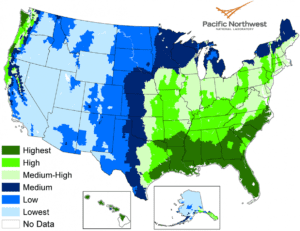
Rainwater availability map, source: U.S. DOE Office Of Energy Efficiency & Renewable Energy, public domain.
Spring Water (or “Artesian” Well)
Not to be confused with an “artisan” well—which we suppose would be mindfully dug and finished with locally-sourced materials. An artesian well or spring occurs where the surrounding water table is high enough that water naturally flows from the ground (a spring), or where the aquifer pressure causes the well to flow of its own accord (an artesian well).
Similar to rainwater catchment, this is a true all-natural water source. This can be considered the ideal situation. Short of a extended region-wide drought which depletes your aquifer, your water source is virtually assured.
As with any source, care must be taken to avoid contamination, and the water safety and quality should be tested periodically.
Well Water
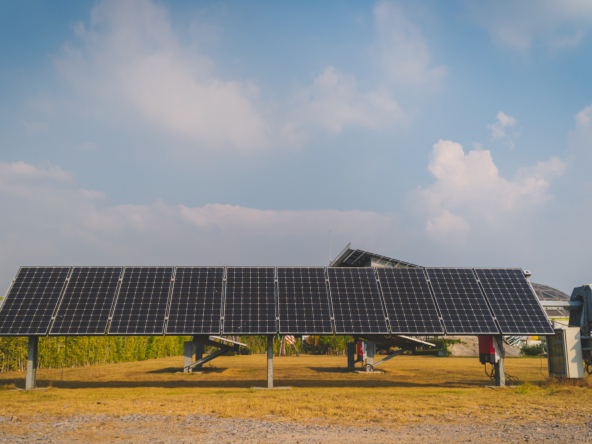
Most people living in rural areas get their water from a well—either on their own property, or shared. This is a fairly reliable source, but generally depends on an electric well pump. Solar powered pumps are available, but without a reliable power source, your water supply will also be unreliable. This accentuates the need for a backup power system with sufficient capacity for both your well pump and domestic needs.
In rural subdivisions, a single well may serve a number of neighboring parcels, with annual or monthly fees for upkeep and expenses. If looking at a property with a shared well, be aware that there may not be any backup power supply or water tank, and water will simply stop flowing if the power goes out.
Surface Water
If you happen to have property adjacent to a creek, lake, river, or stream, you have a potential year-round source of water. Key here is researching the relevant laws governing water rights in your area. Depending on your area, you might be completely forbidden from using this water, be able to make limited use, or even able to secure rights for agricultural uses. Also research potential water quality issues, and make sure to adequately address treatment and filtration.
Hauling Water
In some situations, a water tank may be your only option. This is the case in arid regions with minimal rainfall and no accessible ground water. Or for families just getting started in rural living, the cost of drilling a well may be prohibitive, so they opt to start out with a water tank to meet their immediate needs.
Your tank can be filled with water you haul yourself, or delivered via water truck. In either case, you will still be reliant on having a reliable source of water. This may be friends or neighbors who are willing to allow use of their well, or water purchased from a bulk water supplier.
This is not an optimal solution by any stretch, but something that should be considered as a stop-gap solution, or if your primary water source fails.
Learn More
Want to learn more about establishing a self-sufficient retreat? Get Jonathan Rawles’ Survival Retreats & Relocation in paperback or digital edition. Also available on Amazon.
Don’t miss the wide variety of properties with their own water supply here at SurvivalRealty.com. If you’re looking for that self-sufficient property, don’t hesitate to reach out.